
 Call Now
- September 5, 2026
The first of the development phases of childhood is the early development phase. During the early stages of development, children start developing their communication skills, their emotional intelligence, their coordinated physical abilities, their social skills, and their ability for thinking. Their experiences at an early age can either help build or break their confidence, inquisitiveness, and open-mindedness.
Early Childhood Education is a safe and comfortable environment for children, where they can learn by means of playing, exploring, conversing with others, and engaging in special activities. For parents searching for preschool education for their children in Dehradun, understanding how early education works can help them choose the school that’s to trust with their child’s development.
What Is Early Childhood Education?
Early Childhood Education is defined as the education and learning made primarily during the first years before the child is in Primary Schools. This education differs from normal education since its goal is to develop the whole child both physically and intellectually, socially, emotionally and creatively.
The learning process for young children is different than for older children. They are interested in understanding ideas better when they are able to touch, see, move and act. This means that an appropriate kind of learning program for preschoolers includes a mix of some structured activities with opportunities for independent work.
Why Is Early Education Important?
The first years of life are characterized by quick developments. Children start learning communication skills, managing their feelings as well as establishing relations with people in their environment.
There are a few benefits that are to be gained from early childhood education:
- It stimulates proper communication and listening abilities.
- It promotes confidence and independence.
- It helps to develop innate curiosity and creativity.
- It lays the foundations for reading and numeracy.
- It pushes growth and coordination.
- It provides children experience of working with people.
Effective education should provide these opportunities but it shouldn’t hurry children and force them into learning things too quickly.
Learning Through Play and Exploration
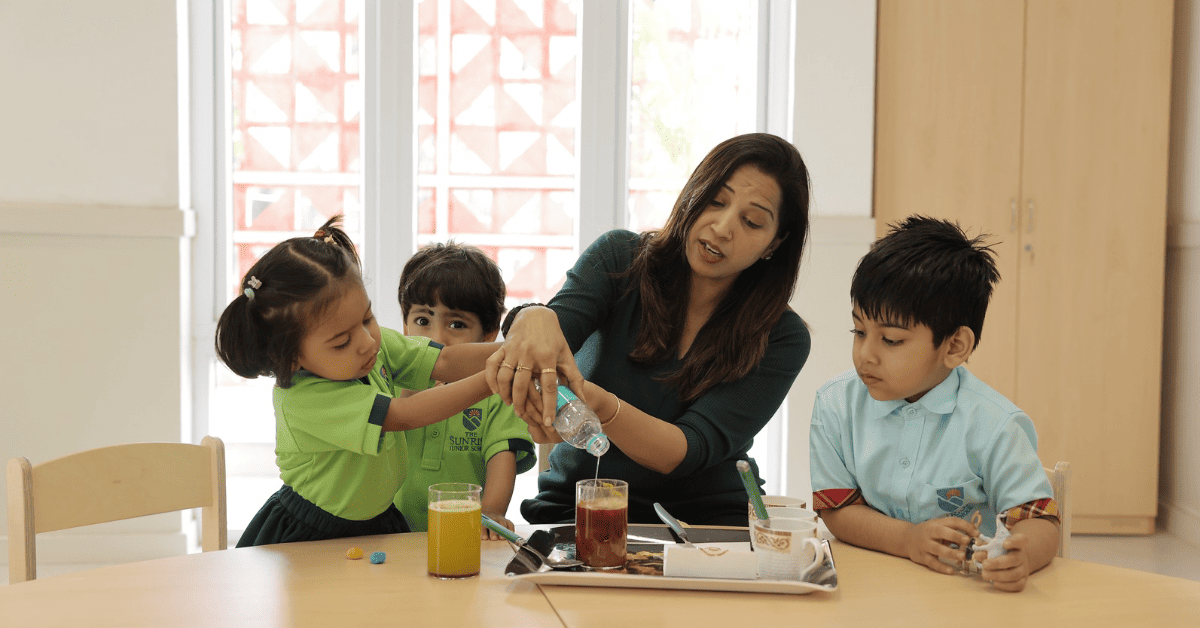
Play is important for learning during early childhood. Although it may seem simple, play proves to be a complex activity that needs communication, observation, creative thinking and problem-solving skills.
Building with blocks teaches children basic concepts such as balance, shape and size. Roleplay improves language skills, imagination and social relations. Jigsaw puzzles develop concentration and logical thinking skills. Playing outside develops fitness and coordination.
Apart from that, children learn things while exploring colours, plants, water, textures and other objects.
Language and Communication Development
The process of language development comprises listening, comprehension, speaking and articulating concepts. Stories, musical compositions, rhymes, dialogues as well as acting can help expose children to new words and sentence constructions.
Educators can facilitate communication, by posing open-ended questions and providing enough time to each child for giving out his/her responses. Children should feel free to express themselves, without worrying about errors.
Parents can help by reading together with children, talking about everyday situations and patiently listening to their children’s ideas.
Early Literacy and Numeracy
Literacy is defined as the ability to read, write, and interact with various forms of media. According to the World Literacy Foundation, early literacy starts even before children read on their own. The foundation of early literacy includes various activities such as looking at picture books, listening to stories, and understanding the meaning of printed text.
Similarly, early math involves more than writing numbers. Early math comprises counting, sorting, comparing, recognizing patterns, and identifying shapes.
Overall, the emphasis should be on play and practical experience rather than excessive dependence on worksheets and memorizing facts.
Social and Emotional Development
It is vital to have appropriate emotional and social development in children to be able to learn effectively. The children must have help in recognizing feelings, showing emotions in the right way, and grasping the consequences of behavior on others.
Cooperative activities give kids the chance to practise such skills as sharing, taking turns, listening, and collaborating with others. If the child experiences a conflict, it can also be a learning experience of communication if the teacher helps him communicate properly.
A caring environment (home/school) gives children the sense of security.
Physical Development and Coordination
Physical growth is made up of both gross and fine motor skills. Activities like running, jumping, climbing, and balancing help strengthen larger muscle groups. Some fine motor activities, such as drawing, coloring, threading, and building, help with hand control and hand-eye coordination.
Fine motor skills acquisition is essential for the development of writing skills and the ability to perform daily tasks such as eating and dressing. An effective preschool program should include sufficient opportunities for both indoor and outdoor movement.
Creativity and Imagination
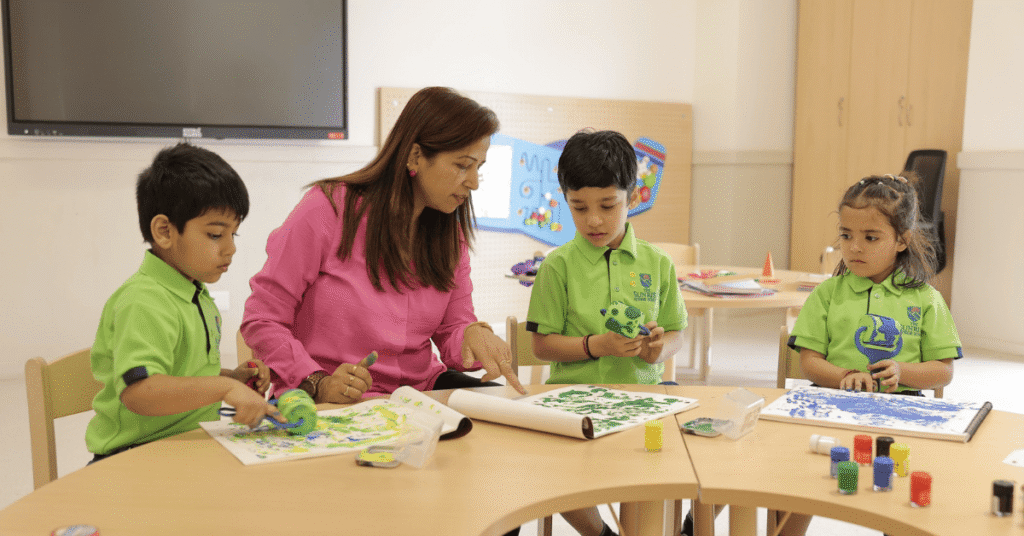
Artistic fields such as music, motion, narrative and imagination give children the chance to share their feelings and thoughts with others. Creative activities also inspire experimentation, making choices and thinking independently.
It is important to let children go through the creative process without requiring them to create a great result. If teachers and parents value effort and creativity, children can grow more confident in presenting their ideas.
Knowledge of Environment and Society
Learning in preschool helps children better understand their environment, society and responsibilities. Activities connected to animals, plants, seasons, jobs and local customs can combine their studies with daily life.
Children can also learn a number of simple habits such as saving water, keeping clean and taking care of plants and people. For children growing up in Dehradun, observing the natural environment can provide meaningful opportunities to learn about weather, trees, animals and environmental responsibility.
Choosing a Preschool in Dehradun
Once parents decide to look for an early learning school in Dehradun, they should not limit their inquiry strictly to classrooms and facilities; there are key factors to be considered:
- A safe and kid-friendly atmosphere
- Caring and responsive teachers
- Age-appropriate methods of learning
- Opportunities for play and physical movement
- Attention to emotional health
- Clear communication with parents
- Respect for individual learning differences
- A balance of literacy, numeracy and creativity
Parents should also pay attention to the location as the preschool that is located close to home will make daily routines for the children more comfortable.
The Sunrise Junior School in Dehradun offers a unique opportunity for early childhood education that is based on the principles of play, playbased education, and active interaction.
How Parents Can Support Early Learning at Home
The child’s initial educators are their parents. Simple actions at home can help ensure successful Early Childhood Education:
- Read and talk about various stories with the child.
- Invite your child to ask questions and respond to them calmly.
- Let the child perform appropriate tasks independently.
- Encourage outdoor and creative play.
- Be ready to talk about the feelings experienced by family members.
- Adhere to established routines.
- Appreciate efforts, not flawless results.
- Keep in touch with the teachers.
There is no need for parents to create a classroom at home. It is enough to provide support, communication, and play.
Conclusion
Early Childhood Education forms the basis for the future learning and development of children. An appropriate program should develop communication, thinking, physical activity, creativity, interpersonal relations and emotional stability.
In order to choose the right preschool education facility in Dehradun it is important to understand the school’s approach towards the entire child, not just academics. When parents and teachers cooperate together, children receive the necessary motivation and empowerment to communicate, explore and develop a positive attitude towards learning.
Frequently Asked Questions
Learning begins at birth, but formal preschool education is usually introduced at the ages between 2 and 4 years, depending on the child’s readiness and development stage.
Preschool education involves a range of support including communication skills, mobility, emotional development and creativity in addition to being school ready.
Play helps children communicate, experiment, make choices and resolve problems. It also makes the learning process active, albeit fun and suitable for children’s age.
Parents should focus on safety, child-teacher relationship, methods of learning, daily schedule and opportunities for play and communication with parents. The child should feel cared for, welcomed and interested in learning.
Parents can help their children learn by making the learning process easier and without any stress, through storytelling, encouraging discussions, allowing the child to play and helping parents with daily chores.

