
 Call Now
- October 19, 2026
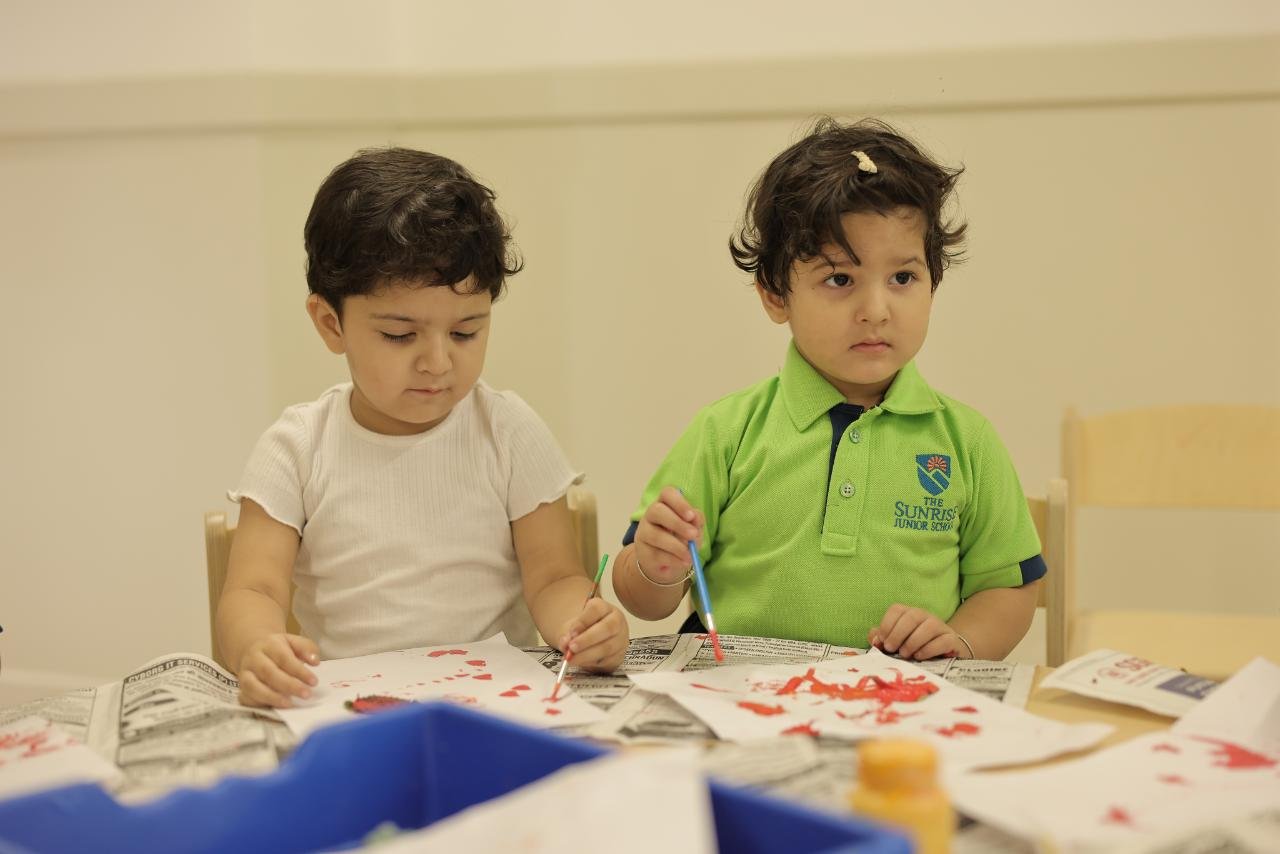
For many children, preschool is usually their first structured encounter with the outside world. new people, new associates, new habits, expectations, group tasks – all this makes preschool a place where children may form their self-esteem, develop communication skills, and learn how to build relationships with others.
Children don’t learn socialization in preschool by means of one lesson; socialization is a process that takes time and involves observing how others act and interact. For parents from Dehradun, having an idea of the process of socialization may help them teach their children to communicate without expecting them to be successful right away.
What Are Social Skills?
The capabilities that kids use to interact with the people around them are termed social abilities. As such, social skills include both things like saying “hello”, learning how to lend an ear when someone talks, and sharing with other kids.
Preschool children are learning how to solve problems according to what adults think, but they are still in the process of learning how to regulate established behavioral mechanisms. For example, a young child understands that he has to share toys with others, but giving up his toy that he is fond of is rather demanding.
Learning to apply social skills by repeating actions and using examples takes time.
Building Confidence Through Everyday Experiences
Confidence in kids builds as they experience acceptance and capability. In preschool, kids gain opportunities to engage with tasks, enjoy working in groups, and complete activities.
A child could gain confidence through experiences such as participating in songs and activities, cleaning up toys, or presenting his/her artwork to peers.
Adults can help kids build their confidence by praising their specific efforts, rather than giving them general compliments. For example, saying “You kept trying until the pieces fitted” provides more information than just saying “Good job.”
Kids should also be allowed to make mistakes, depending on their age. By immediately providing assistance to kids every time they face difficulties, adults may deprive them of chances to build confidence and persistence.
Developing Communication Skills
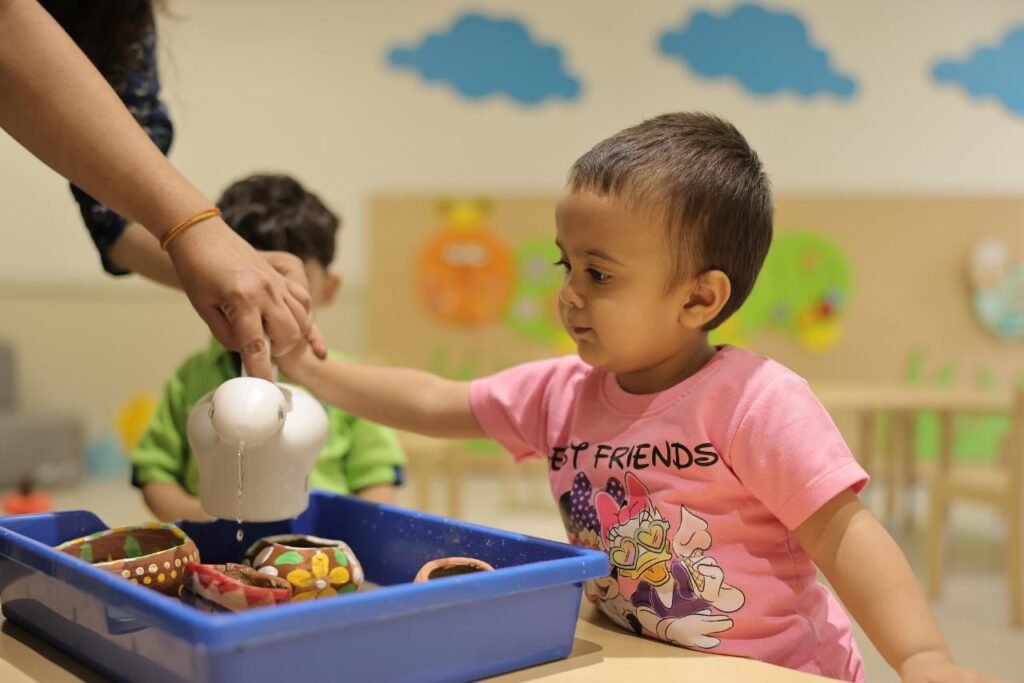
Communication encompasses more than just being articulate; it also means listening to others, being able to read body language, knowing when to pipe up, being able to ask questions, and making your desires known.
During preschool, children will naturally get many chances to practice communicating. They will be part of group discussions where they will listen carefully to others and voice their own ideas, and during playtime they will take on different roles, ask for things, make regulations and discuss what should happen next.
Answers to open-ended questions during lessons will help educators sharpen their students’ communication skills. Methods such as storytelling and music, visual materials, and role playing will give them a chance to increase their vocabulary and learn about appropriate and inappropriate uses of language.
Some children might be shy and require some encouragement to participate in the conversation; thus, it might be a good idea to group those kids in smaller groups and be nice in getting them involved.
Learning to Make Friends
In early childhood, the process of making friends is both significant and complicated. Preschoolers are likely to shift playmates frequently, prefer parallel play, or even consider others as close friends after a single fun session together.
Friendship forms through shared activities and positive experiences. Children build a bond by engaging in joint activities such as construction work, pretending, solving simple tasks, or sitting next to each other during story time.
Adults can facilitate this process by teaching children simple phrases like “Can I join you?” or “Let’s work together.” Such phrases allow children to learn how to communicate with each other.
Parents must refrain from labeling their children as shy or antisocial, as this could alter their perception of themselves. It is more appropriate to recognize that some children need more time to get comfortable.
Teamwork for Children
Team cooperation for youngsters commences with straightforward group tasks. Children have the opportunity to collaborate by organizing materials, constructing a frame, drawing a picture, and acting out a story.
Group tasks teach children to see that people may think and act differently and thus learn to wait, collaborate, share, and adapt to changing circumstances.
Teachers facilitate cooperation by ensuring that one child does not do everything on behalf of other children. The aim is not to achieve collaboration but to teach children what it means to work toward a common outcome.
Managing Emotions and Disagreements
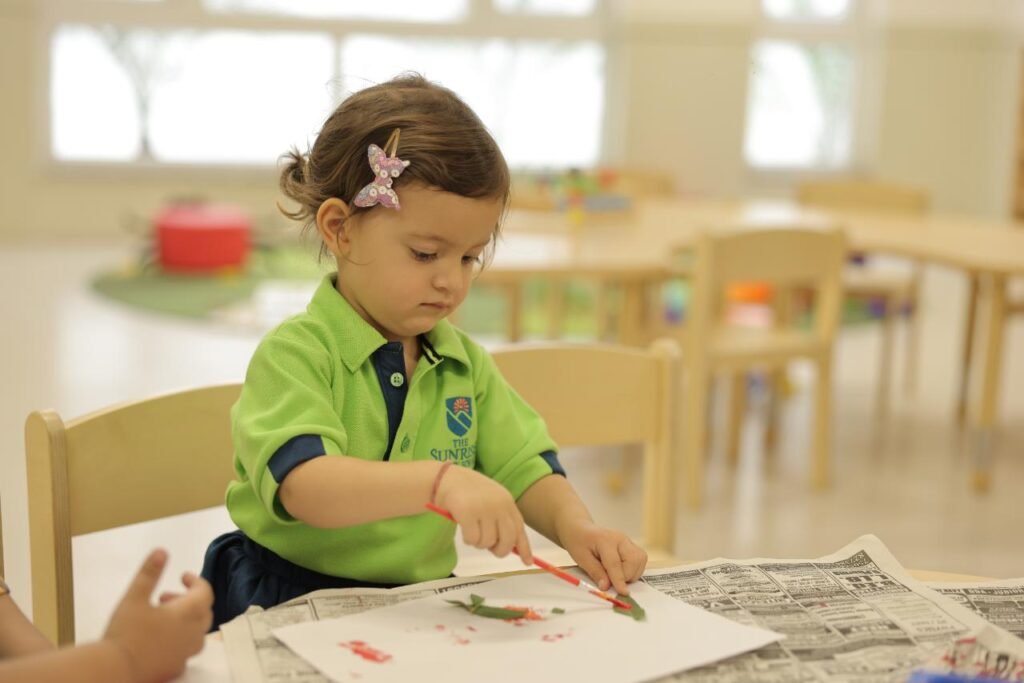
Children’s emotional development relies heavily on the social development of kids. When kids can understand and communicate emotions, they find it easier to interact.
Children in preschool argue over toys, space, turns, and playing rules. The situation can be taught to their advantage if adults remain calm. Instead of directly resolving each conflict, an adult can assist in resolving the situation by explaining the events, listening to the child, and finding an acceptable solution.
The children can be taught phrases like “I am still playing with it”, “I am angry,” or “Can I go next?” These phrases provide the alternative to screaming, grabbing or being isolated.
Emotional regulation is a process. Young ones in preschool need to see adults being calm in the time of strong emotions and providing support.
Respecting Different Personalities
Children have different ways of socializing. While some enjoy group activities, others want to socialize with one friend or enjoy a quiet play area. Both these approaches can be healthy.
When developing social skills in preschool, the child’s personality, language skills, family background, and previous experiences must be considered. For instance, if a child observes from a distance before participating, he or she could be actively obtaining information instead of refusing to join.
Inclusive preschool settings provide a variety of ways for children to engage with their peers: through games in pairs, small groups, outdoors, during creative activities, or in big groups.
How Parents Can Support Social Development
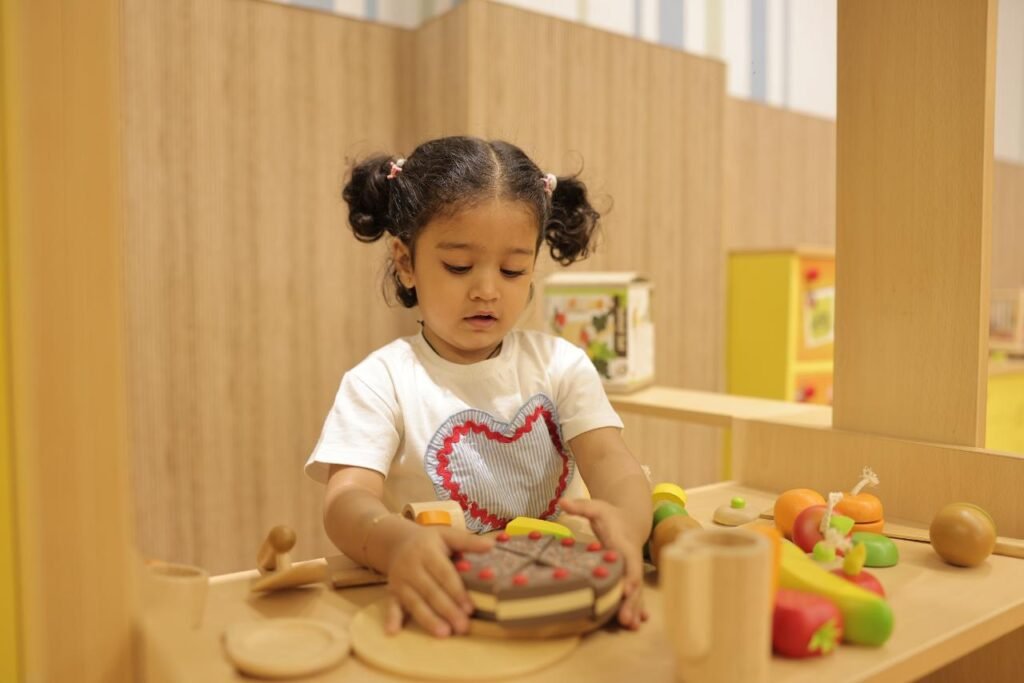
Parents can assist children in acquiring social and communication skills through everyday home life. Greeting the neighbors, talking during meals, going for walks in the park, playing games and doing chores with parents can be helpful.
Playing roles can help children get ready for difficult situations that may arise. Parents can play the roles of asking to play, introducing oneself, and responding to another child who wants that particular toy.
When talking about a preschool experience, trying to ask the right questions could work much better than just saying “How was school?”
For example, it is better to ask, “Who did you play with?” or “Did you do anything good for anyone today?”
At the same time, Sunrise Junior School in Dehradun can help to develop the skills through the regular group process while parents teach their children to respect others.
Conclusion
Confidence, communication, friendship, teamwork, and emotional awareness are developed by means of the regular social experiences. Pre-school offers kids an organized setting where they learn how to use these skills with some help. Indeed, the development process could be quite slow, however, supportive reinforcement at schools and at home allows kids to be more willing to communicate, work with people and take part in the activities set by the society.
Frequently Asked Questions
They enable kids to communicate, cooperate, build relationships, resolve conflicts and engage in group activities effectively.
Preschool gives opportunities to children to make decisions, accomplish different tasks, convey thoughts, and experience new things with the support of adults.
Give the child more time, simulate small social situations, teach them how to communicate, and do not give them negative labels.
Conversations, reading together, telling stories, playing roles, and letting children respond to parents help the development of communication skills.
Yes. Minor disagreements are a normal part of social development and can help children learn negotiation, empathy, and problem-solving.

