
 Call Now
- October 28, 2026
People usually think about play as something which interrupts learning, whereas play serves as an excellent way of gaining knowledge for young children. They are able to get information, resolve problems, interact with other individuals, and learn about their environment through gaining experience. The method of using play for educational purposes is called play-based learning.
In a good preschool, play is not used only for the purpose of keeping children busy. On the contrary, play contributes to every aspect of children’s development such as physical, mental, social, emotional, and language development. For those parents who are interested in getting quality early education for their child (children) in Dehradun, understanding the importance of learning through play is vital for making the right decision.
What Is Play-Based Learning?
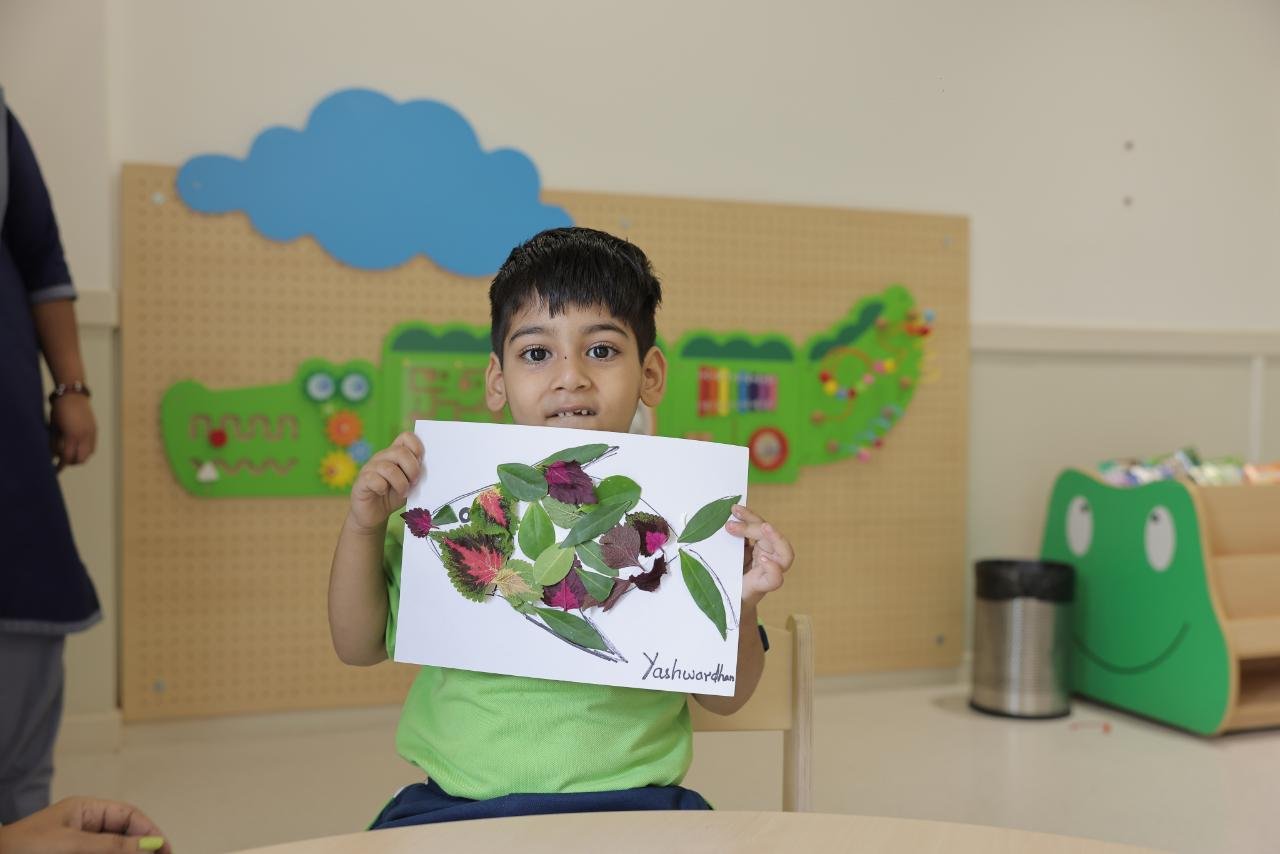
This method in education teaches children important concepts and skills through enjoyable and fun actions which are developed according to their age. Children may, for instance, build something using blocks, engage in role play, solve puzzles, use various natural materials, sing songs, or play with colors and shapes.
Learning based on play allows children to act in the learning process. Instead of being passive in the process, they can observe and be involved in it.
Effective learning through play includes both child-directed and teacher-directed experiences. It gives children the ability to explore while the teacher monitors the process and asks questions.
Free Play and Guided Play
Play that is done freely is more directed towards children because it allows them to choose what they want to do and how to use the materials. Such play develops children’s creativity, free will, and decision-making abilities.
On the other hand, Guided play is intentional and focused on achieving a particular learning goal while at the same time enabling children to make relevant choices. For instance, teachers may set up various containers, measuring cups, and water for kids to discover how much volume they can hold. Instead of explaining everything, the teacher can simply ask kids, “Which of these containers can hold the most water?”
Both forms of educational play are valuable. Free play encourages originality, while guided play helps children explore specific concepts through discovery.
How Play Supports Cognitive Development
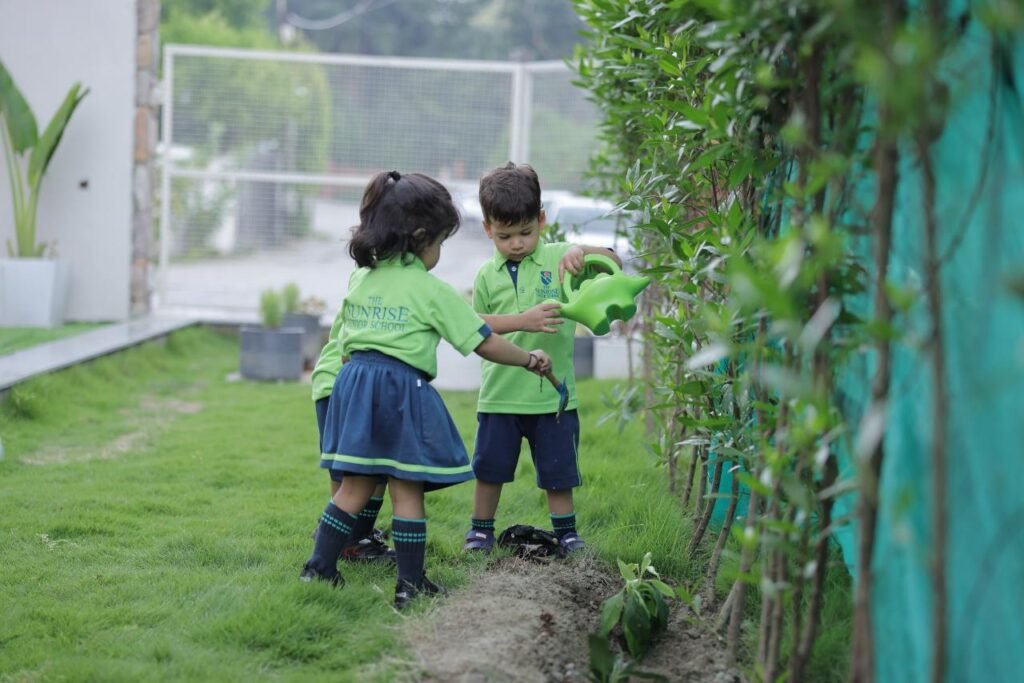
While playing, children often have to solve problems necessitating thinking and experimentation. A tower made of blocks may collapse, a puzzle piece refuses to fit, and the toy shop may need some order in its production process.
These experiences compel children to learn about cause and consequence, patterns, size, amount, and spatial relationships, and allow them to accurately compare, predict, memorize, plan, and modify their thoughts on a concept.
Since children are engaged in the activity, experiential learning is the most straightforward learning model, which allows children to comprehend concepts with ease and to remember what they learned.
Building Language and Communication
The act of playing provides children with natural opportunities to communicate with each other. Asking them to act out various roles or situations helps them learn to give a role to their playmate, elaborate on their ideas and discuss the scenario.
Participating in activities also encourages children to listen, inquire, and react.
In order to improve language learning for their students, educators can employ techniques such as teaching new vocabulary and allowing children to express their feelings. For example, children can learn to use words like broad, thin, firm, and balanced while working on a bridge construction project.
Supporting Social and Emotional Skills
Engaging in play with others assists kids in grasping the concepts of cooperation, patience, and responsibility. They become aware of sharing resources, waiting their turn, dealing with trivial conflicts, and perceiving what others feel.
Play is also an opportunity for children to express their emotions safely. A child can act out with-dolls, puppets, or through playacting an event that was thrilling, puzzling, or challenging. This enables kids to sort out their feelings and to know themselves better.
Success while playing enhances confidence in a child. Solving a jigsaw puzzle or trying out a new way of balancing blocks, kids learn that hard work is rewarded.
Strengthening Physical Development
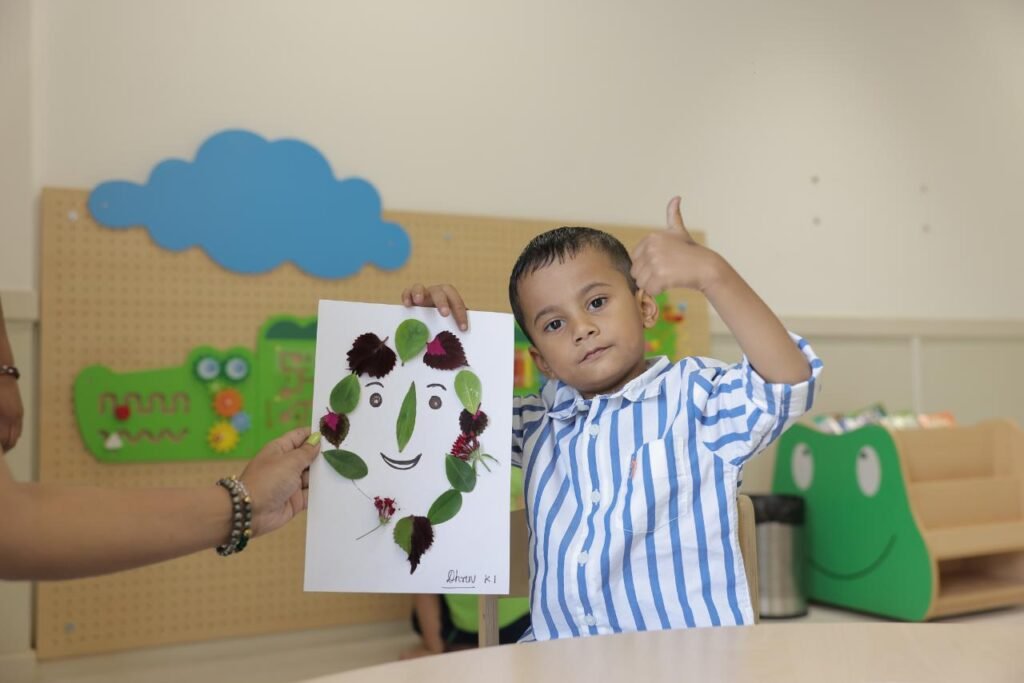
There are several activities that preschoolers engage in for the development of their fine and gross motor skills. Jumping, running, balancing, climbing and dancing, all the activities involve the use of the big muscles and coordination.
Certain activities like clay molding, bead threading, block building, etc contribute towards the development of fine motor skills like dressing, eating, and writing skills.
In addition to that, physical playing improves children’s understanding of their body as well as their direction.
The Role of Teachers in Educational Play
Although a child-centered learning environment would imply that children are free to explore freely without any interference from adults. However, teachers still need to plan appropriate activities using appropriate materials and organizing the whole process.
For an experienced teacher, the key is to be careful with adult interference. Thus, rather than taking control of the process, the teacher may ask children questions, pose them challenges, or lead them into different directions.
At Sunrise Junior School located in Dehradun, the idea of play-based environments represents one of the elements of early childhood curriculum embracing the needs, interests, and developmental characteristics of children.
How Parents Can Encourage Play at Home
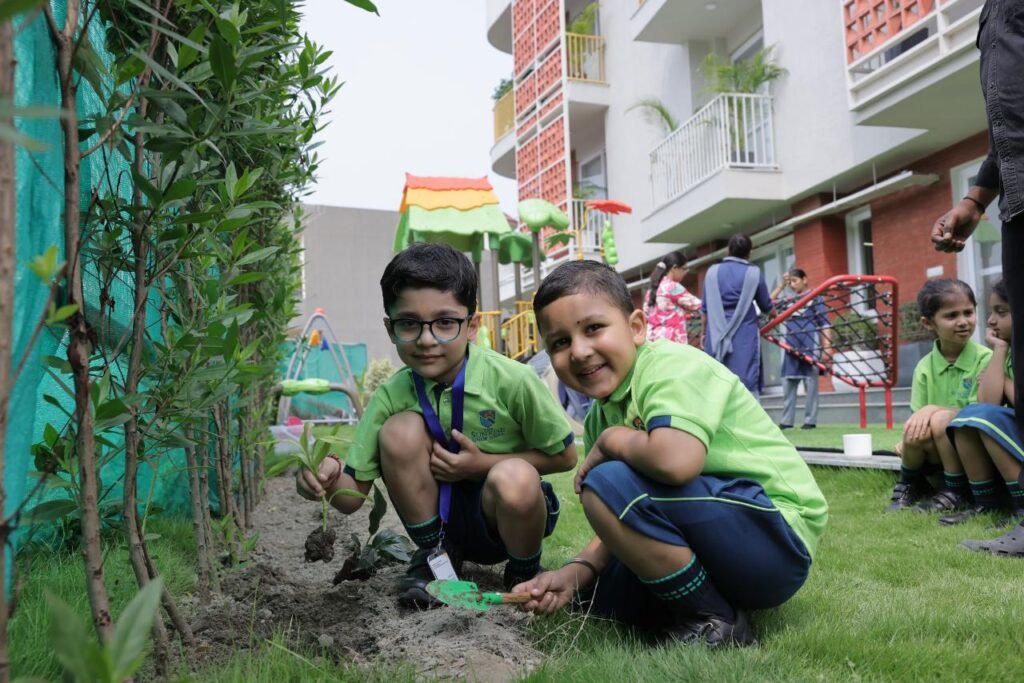
Learning through play doesn’t even necessitate expensive toys. Kids can learn using cardboard boxes, baking pans, blocks, sheet paper, crayons, scraps of cloth and safe household items.
Parents may promote learning through experience by providing their children with ample time for uninterrupted play, restricting excessive guidance and posing appropriate questions. Examples include: “What are you creating?” and “What else could you experiment with?”
Conclusion
During the early years, play and education go hand in hand. In fact, it is one of the strongest ways for children to explore concepts, have social interactions, improve their physical abilities, and learn about their environment. The best approach is one that balances free play, guided play, and structured preschool activities that will produce confident and interested learners. Parents should look for preschools in Dehradun that have a good understanding of the importance of play in child development.
Frequently Asked Questions
The main goal of play-based learning is to help children gain knowledge and skills through enjoyable and meaningful experiences.
Yes, free play is an activity that is in the hands of children, whereas guided play has objectives and help from adults as its basis.
Yes. Through play, children can learn math concepts like numbers, shapes, patterns, sequences, measures, etc.
A day should consist of play, moving around, resting, talking, and doing various activities.
They need to ensure that there are plenty of varied materials present in the preschool, age-appropriate activities, teachers involved with children’s play, opportunities for children to choose, and activities that are a balanced mixture of guided and self-directed.

